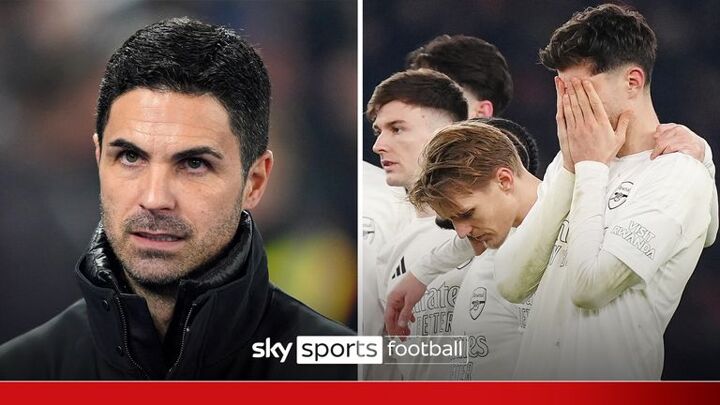
Arsenal are awaiting the extent of the injury suffered by Gabriel Jesus in the FA Cup third round against Manchester United but will not panic when it comes to potential signings in this transfer window.
January was always going to be a “reactive window” for the Gunners, with Mikel Arteta claiming the club would “look inward first”.
Arsenal have players who can play in all positions in the forward line, with Raheem Sterling returning to fitness and Ethan Nwaneri returning soon.
It is understood that Arsenal will have their objectives and both long-term and short-term deals are being explored. The club will make a decision on whether to pursue these objectives depending on the availability of the players.
A long-term target would be seen as someone who would immediately improve the first team, while the aim of a short-term deal would likely be to improve the competitiveness in the squad.
Arsenal are thought to be in a very good position when it comes to the Premier League's profit and sustainability demands. But there are a few reasons why that doesn't necessarily mean they can (or want to) go into the market and spend a lot of money during this time.
Firstly, not only do Arsenal have to comply with Premier League rules, but they are also bound by UEFA rules. These are already stricter than domestic rules and from next season will mean that the amount they spend on wages, transfer fees and compensation cannot exceed 70 percent of their total income.
Secondly, the Arsenal model – like other big clubs – is to prioritize the summer window. Recruitment planning is done up to three years in advance, meaning that – even without a sporting director since Edu's sudden departure in November – targets and budgets are set well in advance.
Interim sporting director Jason Ayto will continue to lead the recruitment team following Edu's departure. The process for a permanent sporting director is underway, with Ayto a candidate to fill the role long-term.
Finally, players like Thomas Partey and Jorginho are out of contract this summer and will need to be replaced in the next window. Budgets will have to take this into account, either through new deals or through replacement financing.
Is Arteta to blame for Arsenal's glaring problems?
Another succession of missed chances, a potentially serious injury to Gabriel Jesus and a grueling shootout defeat at home to an ailing rival. Sunday's FA Cup match against Manchester United could not have gone much worse for Mikel Arteta and Arsenal.
The manner in which the defeat came, just five days after they were beaten 2-0 by Newcastle in similar circumstances in the first leg of the Carabao Cup semi-final, further highlighted Arsenal's attacking problems.
How did it come to this? Who is to blame? And what should be done next?
Watch highlights of Premier League matches during the week on Sky Sports for FREE FIRST
Watch FREE highlights of the Premier League matches on the Sky Sports website and app during the week first, with free highlights available shortly afterwards.